
A dog grooming course prepares individuals by teaching them to recognize canine behavior and adapt to different temperaments. It offers hands-on experience with diverse breeds, enhancing handling skills and grooming techniques dog grooming academy. The course emphasizes safety protocols to protect both groomer and dog, while also building effective client communication to foster trust. This thorough training equips learners to confidently manage real client dogs. Exploring further reveals additional valuable insights into professional grooming practices.
Understanding Canine Behavior and Temperament
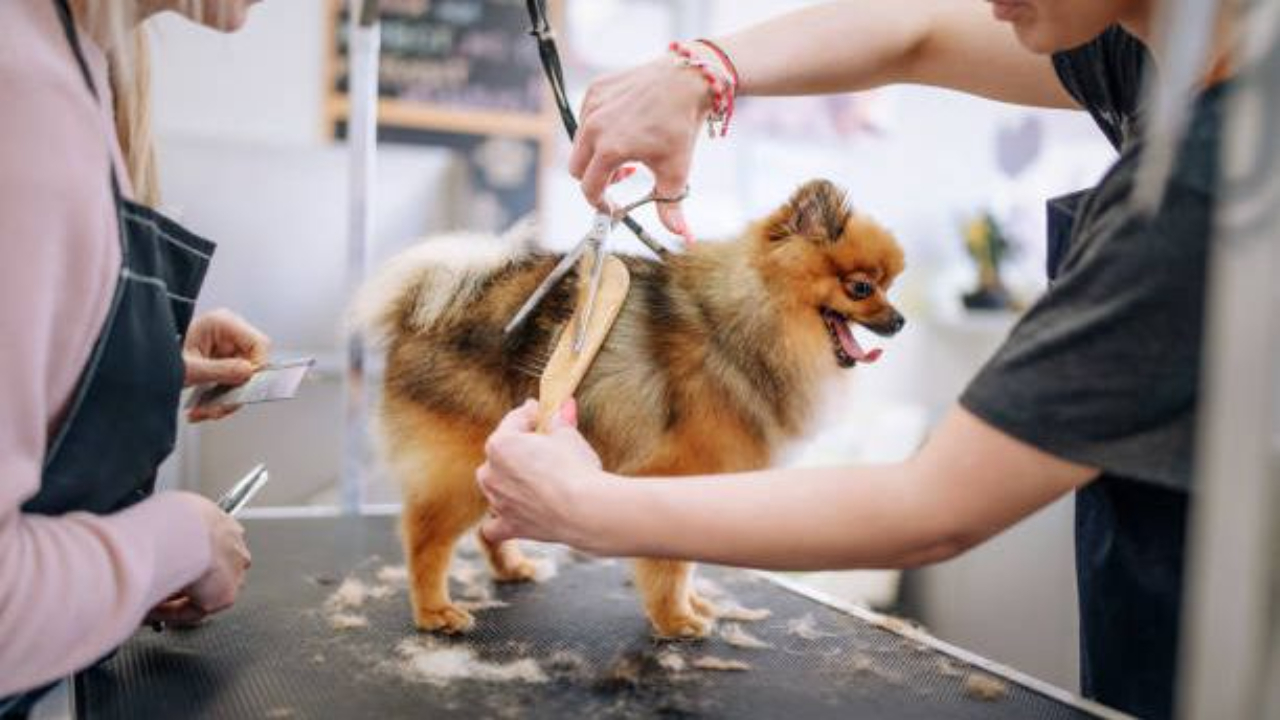
Although grooming primarily focuses on a dog’s physical appearance, understanding canine behavior and temperament is crucial for effective and safe handling.
Recognizing body language signals, such as tail position, ear movement cosmos pet universe, and eye contact, helps groomers anticipate a dog’s reactions and adjust their approach accordingly. Awareness of temperament differences among breeds and individual dogs allows for tailored handling techniques that reduce stress and promote cooperation.
This knowledge empowers groomers to create a calm environment, fostering trust and minimizing the risk of bites or injury. Ultimately, grasping canine behavior guarantees both the dog’s comfort and the groomer’s freedom to work confidently, making the grooming process smoother and more enjoyable for all involved.
Hands-On Practice With Diverse Dog Breeds
Building on an understanding of canine behavior and temperament, practical experience with a variety of dog breeds enhances grooming skills considerably.
Exposure to different breeds allows groomers to recognize breed-specific coat types, skin sensitivities, and grooming needs. This hands-on practice cultivates adaptability and confidence, essential qualities for handling real client dogs.
By working with diverse breeds, groomers learn to adjust techniques to suit each dog’s unique requirements, promoting efficiency and reducing stress for both dog and groomer. This experience also fosters a deeper appreciation for canine individuality, empowering groomers to provide personalized care.
Ultimately, direct interaction with multiple breeds prepares groomers to meet the unpredictable challenges of real-world grooming, supporting their pursuit of professional freedom and mastery.
Learning Professional Grooming Techniques
Mastering professional grooming techniques requires a thorough understanding of specialized tools, precise cutting methods, and efficient workflow strategies.
A dog grooming course introduces students to a variety of clippers, scissors, and brushes, teaching how to select and use each tool to achieve clean, consistent results. Techniques such as layering, blending, and trimming are practiced to accommodate different coat types and desired styles.
The course emphasizes developing speed without sacrificing quality, enabling groomers to work independently and meet client expectations. By learning these skills in a structured environment, aspiring groomers gain the confidence to adapt their approach to each dog’s unique needs.
This foundation promotes creative freedom while maintaining professionalism, preparing students for the realities of grooming diverse client dogs.
Managing Safety for Both Groomer and Dog
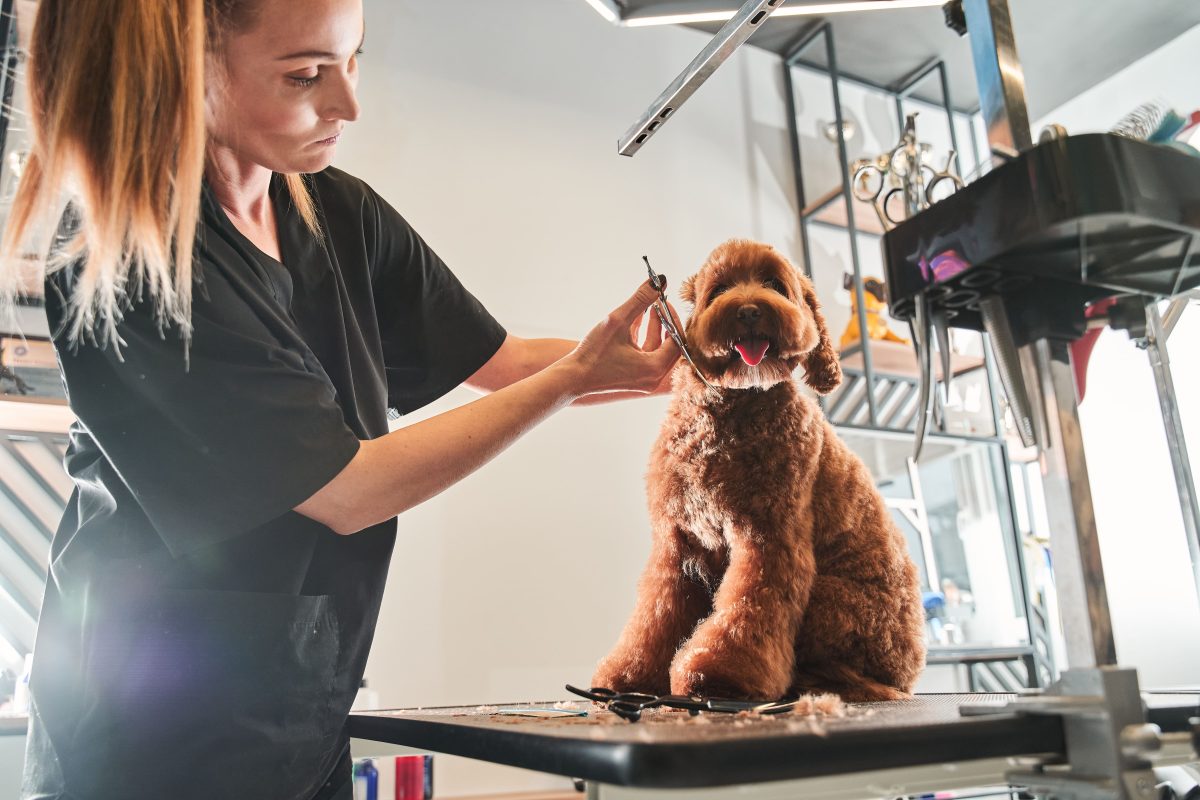
Numerous safety measures are essential to protect both the groomer and the dog throughout the grooming process.
A dog grooming course emphasizes handling techniques that minimize stress and prevent injury, such as gentle restraint and calm communication. Proper use of grooming tools, including scissors and clippers, is taught to avoid accidental cuts.
Understanding canine body language enables early detection of discomfort or agitation, allowing timely intervention. Hygiene protocols reduce the risk of infections, while maintaining a clean workspace guarantees safety.
Courses also cover emergency response skills, preparing groomers to act swiftly if a dog shows signs of distress.
Building Client Communication and Trust Skills
How can groomers foster lasting relationships with their clients? A dog grooming course emphasizes clear communication and trust-building as essential skills.
Groomers learn to listen attentively to owners’ concerns and preferences, ensuring services align with client expectations. Transparent discussions about procedures, potential challenges, and pricing cultivate confidence.
By demonstrating empathy toward both dogs and owners, groomers create a welcoming atmosphere that encourages open dialogue. These skills reduce misunderstandings and promote repeat business.
The course also trains groomers to observe dogs’ behavior and convey insights sensitively to clients. Ultimately, mastering communication and trust nurtures client loyalty, empowering groomers to work with a diverse range of dogs while maintaining freedom in their professional choices.
Conclusion
A dog grooming course equips individuals with essential skills by combining theoretical knowledge of canine behavior with practical experience across various breeds. It emphasizes professional grooming techniques and safety protocols to protect both groomer and dog. Additionally, the course fosters effective client communication and trust-building abilities. This thorough preparation guarantees that graduates are well-equipped to handle real client dogs confidently and competently in professional grooming environments.